Helical heaps got their credibility in retrofit work, yet the absolute most efficient ventures I observe use them coming from the first day in brand-new development. When the ground is dubious, the site is limited, or even the schedule rejects to budge, helical piles and their cousins-- protection stacks, micropiles, as well as helical tieback anchors-- allow you regulate lots paths along with minimal disturbance. The equipment is compact, the installment is actually quiet, and also ability could be confirmed as you go. That mixture has actually transformed how many of us approach commercial foundation stabilization as well as deep foundation repair on brand new builds.
This is a walk through the complete arc: just how to determine if helical piles match your project, exactly how to develop all of them along with assurance, what to anticipate in the course of mobilization and installation, and just how to avoid the snares that incorporate cost or problem. The particulars come from area knowledge on offices, universities, satisfaction facilities, and health care establishments, alongside a reasonable portion of much less glamorous job like airlift stations as well as canopies.
Where helicals match the industrial toolkit
Helical heaps are actually steel shafts along with one or more helical plates, put in by twist in to soil that may create birthing protection along those plates as well as arrow. The lots transactions with coil bearing and ray friction, at that point into seasoned strata. For brand-new building and construction, they contend most straight with driven piles and drilled poles. There are actually additionally surrounding options that frequently live on the same sketches: protection piles for underpinning or squeezing where resonance is limited, micropiles for extreme tons in constrained websites, and also helical tieback anchor installation where lateral resistance or wall surface stabilization is actually critical.
The best applicants share a style. The grounds are smooth stuffing, organics, or compressible clays up to 15 to 40 feets, underlain through sands or even extremely stiff clay-based. Accessibility is actually constricted sufficient to make a big rig costly or difficult. The structure needs a predictable settlement profile under pillar bunches that may range from 40 to 250 kips, with some edge ailments requiring uplift resistance. I likewise view helicals opted for when the development series is difficult-- for example, when the slab needs to be positioned early and the superstructure rises in phases-- given that helicals come to be a trustworthy, testable element that carries out not rely on lengthy cure times.
A details on substitutes: protection heaps and also micropiles
Not every web site takes helical plates well. Rocks with cobbles, frosty tills, or debris-laden urban packs can easily refuse helices or chew them up. In those instances, commercial resistance pile installation is actually a powerful alternative. Resistance heaps, also knowned as push stacks, depend on the structure or a reaction framework to port sections into the ground up until refusal, offering trustworthy squeezing capability with restricted sound and also vibration. They are common in commercial foundation repair and also structural foundation repair, and also they from resistance pile installation services time to time handle brand-new builds when sequence makes it possible for a reaction frame.
Micropiles are worthy of a seat at the table when tons exceed what a helical or resistance pile may carry in the accessible footprint. Micropile installation uses tiny size punched and also grouted steel elements, commonly 5 to 12 inches, strengthened along with threaded pubs or even casing. Micropiles can punch through rubbish stuffing, improved soil, as well as even rock coatings, after that bond into thick strata for impressive compression and also strain ability. They are slower as well as demand grout logistics, but on clinical or even laboratory properties, or even on car park structures where pillar lots go over 300 kips, micropiles supply a tidy, testable course. In practice, many industrial new-build groundworks incorporate helical piles, micropiles, as well as tieback anchors, deciding on the ideal device every framework line.
Getting the ground honest truth: geotechnical records that really helps
The geotech document is your roadmap. For helical pile style, you yearn for greater than regular blow counts. Ask for constant sampling by means of the stuffing and soft layers, system weights, moisture materials, undrained shear strengths for clays, and grain size distribution for sands. Hand penetrometer analyses and torvane data assistance, but wallet penetrometer amounts alone may not bring the design. A couple of electrical CPT soundings, if the finances endures it, usually purchase themselves since they show thin weak seams that split a bearing horizon.
In coastal markets as well as river lowlands, organics and also peat coatings prevail between 4 and 12 feet. In older city regions, buried building and construction clutter is a wildcard. Either disorder argues for exam probes with sacrificial coils just before ultimate style. Our experts will certainly frequently dash three to 5 installation probes using the intended gear to determine real twist versus depth, then adjust the layout to what the website will certainly enable. That little step can protect against a crew coming from chasing torque for half a day in a lens of residue they performed certainly not recognize existed.
Capacity, torque relationship, and also the amounts that matter
Helical heap style banks on two pillars: academic bearing capability based on helix geometry and dirt stamina, and observational torque correlation throughout setup. For most commercial helical pile installation, ability associates sensibly to ultimate installment twist making use of a factor Kt, commonly in between 7 and also 12 for straight rays and also 10 to 20 for round weak segments, units in kip every kip-foot. The installer files twist directly, as well as the developer sets a minimal torque limit for every design load with a specific aspect of safety.
These assortments are actually not global. Kt depends upon pole geometry, coil measurements and thickness, dirt kind, as well as how well the torque is actually gauged as well as transmitted. I have actually seen Kt reduce to 6 on gentle delicate clays as well as reach 18 in dense sands with round shaft heaps. That variability is why preproduction load examinations are worth the moment. A little program along with one tension exam and one compression examination, evidence or stationary, can anchor the Kt for your task as well as develop your elements of safety and security. For ventures along with critical uplift-- solar energy covers, tensioned fabric establishments, or even covers in wind hallways-- those uplift tests are crucial since clay-based adhesion to rays is seldom as reasonable as textbook worths suggest.
Selecting the heap style and geometry
The choice among helical piles, protection piles, as well as micropiles is not only about soil. It is about tons instances, schedule, and also the equipment you can accommodate on web site. Within helical piles, decisions accumulate rapidly: square shaft versus shot arrow, one helix versus multi-helix setups, coil dimensions, and deterioration strategy.
Square ray piles, often 1.5 to 1.75 ins, cut through tense clay-baseds and also thick soils with a lot less torsional demand on the gear. They excel in strain and are actually a preferred for helical tieback anchor setup given that they permeate without straying. Shot echoing segments, 2.875 to 4.5 ins OD, bring more squeezing as well as sidewise lots, and they put up with distorting better in soft coatings. On pillar grounds with higher squeezing as well as some uplift, a hybrid technique jobs: a round shaft lead, after that a change to a straight shaft expansion if needed to chase after torque through an obstinate layer.
Helix size should match the bearing stratum. If you recognize the thick sand resides at 24 to 30 feets, a 10 to 12 inch helix might carry the style weight, however if the soil is actually weaker or even the weight much higher, a 12 to 14 to 16 inch triple-helix stack can easily supply capability without incorporating span. A lot more coils raises installation torque, therefore validate the rig's twist scalp may reach it. Most industrial rigs made use of for helical anchors have actually scalps measured coming from 7,000 to 30,000 foot-pounds, along with gearboxes efficient in pushing to a few hundred rpm for infiltration. If you need to have twenty kips of twist and also the access street simply enables a mini-excavator, you have an organizing issue, not an installation trick.
Integrating uplift and also lateral demands
Many business structures possess nontrivial uplift: parapets recording wind tons, covers, light steel frameworks, also MEP shelfs dangled coming from roof coverings. Helical tiebacks and also helical anchors produce that convenient, specifically for preserving wall surfaces as well as cellar diggings. Tieback anchors set up at angle of inclinations in between 10 and 30 levels can easily give steady lateral and uplift protection without gigantic deadmen. On one mid-rise along with a no whole lot collection, the digging help utilized a soldier heap and also delaying wall tied back along with helicals that later on ended up being permanent anchors for the cellar wall surface. That conserved a 2nd mobilization and also permit concrete teams function without hefty walers.
For heaps serving as both compression and also strain members, focus on hookup particulars. A great chance exists that uplift controls the screw shear and also layer density on the stack cap. On a logistics facility outside Chicago, the piles possessed loads of squeezing capacity, but a couple of grid lines near large dock doors saw uplift coming from wind suction on a higher wall. The solution was simple: more thick hat platters with four-bolt designs as well as longer embedment into the ground, plus a double-nut detail to latch after torque check.
Corrosion, finishes, as well as company life
Commercial brand new frames anticipate life span of fifty to 75 years or longer. Helical piles stay in dirts where rust ranges from just about passive to threatening. The geotech record should include soil resistivity, chlorides, sulfates, as well as pH. Gently destructive dirts typically warrant added wall thickness or propitiatory steel. Aggressive grounds may demand hot-dip galvanizing, polymer finishings, or a cathodic defense planning. Designers often undervalue scrape throughout installation, which can easily scratch finish off the top segment as well as helices, therefore specify layers with reasonable abrasion resistance or even use priming plus propitiatory allocation on the lead.
An efficient strategy for numerous internet sites: galvanize the lead as well as first expansion, at that point use typical steel over once you go out the wet region. On coastal jobs or near deicing salt direct exposure, extend security greater. There is actually no virtue in an even specification that dismisses groundwater chemistry.
Detailing pile limits and also assimilation with foundations
The toughest pile is actually pointless if the load carries out not transfer precisely. For office footings, I such as a simple tight heap limit that installs to capture sidewise shear and also uplift, along with bottom floor covering steel tied thoroughly around the hat. Steer clear of slim bearing layers grouted into simple hollows. They produce a difficult point and also create quality control tough. A pocket with 6 to 8 ins of cover, shear secrets if needed, and also crystal clear access for torque verification often tends to execute better.
Grade shafts that cover between pile teams must be detailed with enough deepness to withstand the weak-axis bending induced by differential negotiation or shaft imbalance. On floor covering slabs along with circulated helical piles, map the stack locations onto a BIM style early. Clash discovery with underslab channel, flooring drains, and also trenching stops costly field gymnastics. It seems routine, yet many of the hold-ups I see stemmed from a stack touchdown right where a 6 in sewer would like to run.
Construction planning and mobilization
Helical rigs do not require much of a site, yet workers do better with a hassle-free pad, crystal clear hosting for sections, as well as trustworthy accessibility to each framework line. Climate issues less than for bored shafts since there is no spoil as well as no available gaps. Still, when operating in saturated clays, monitor mats aids equipments store angle and stops the pile coming from walking in the course of the first handful of feet of bite.
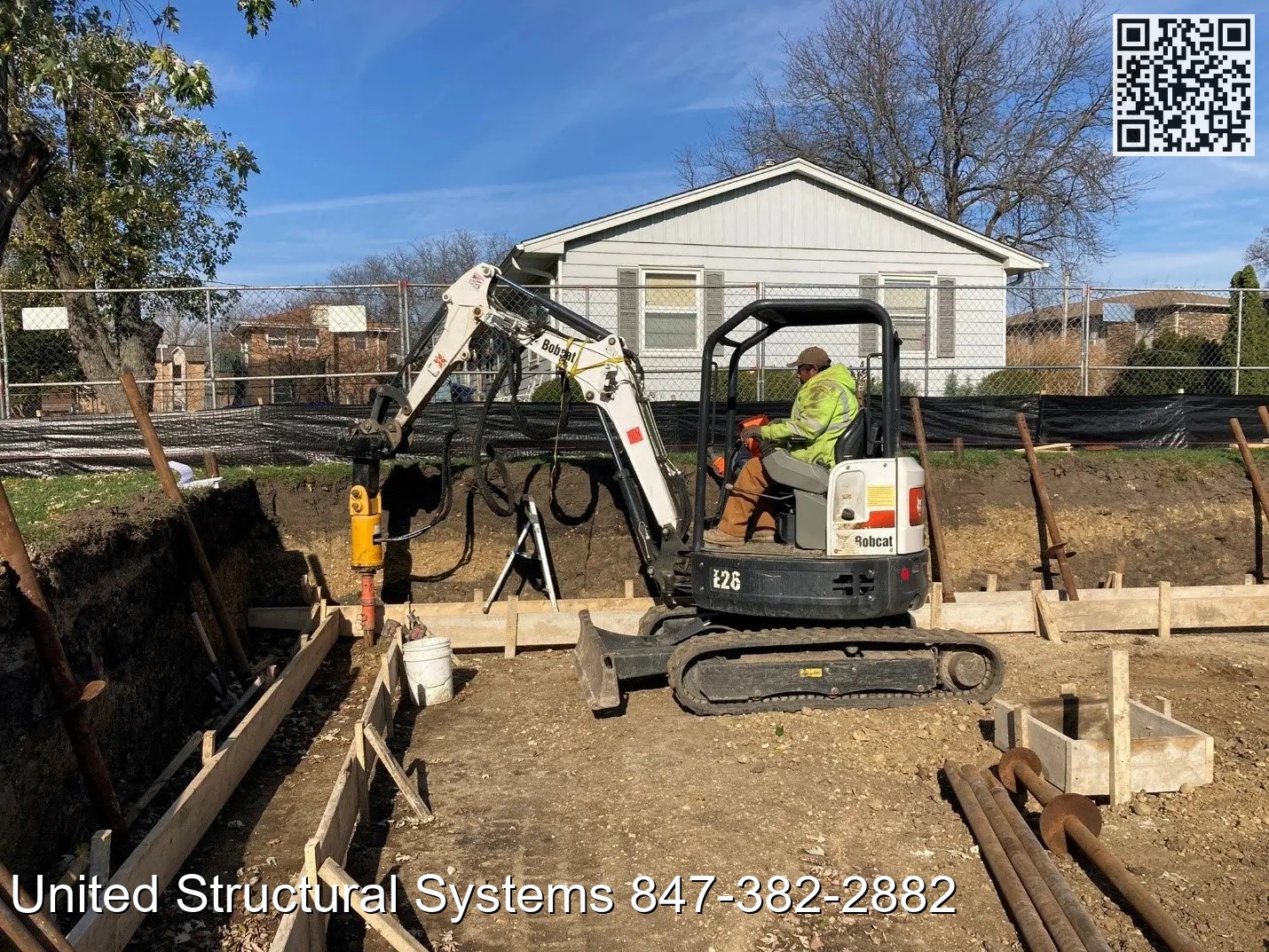
Expect an excellent team to install 20 to fifty piles daily relying on size and torque, along with single-shift efficiency often around 800 to 1,500 linear feets. The hold-up is actually hardly the torque scalp. It is the choreography: delivering sections to the maker, creating square hookups promptly, and catching twist records with opportunity and also depth stamps.
Many jobs pair helical piles along with commercial helical tieback anchor installation for short-lived the planet retention. In those situations, series matters. Mount as well as strain tiebacks initially to support the cut, after that start heaps, working coming from the inside out. If the same rig handles both, arrange the tiebacks to stay clear of starved time on the heap crew.
Installation, examination, and twist verification
Installation must adhere to a clean design. Mark the first helix square to the grid series and also verify the rig mast is plumb. Development at a constant price that prevents over-torquing and also ground remolding, adding expansions as needed. The installer logs twist a minimum of every feet, essentially electronically linked to a depth sensing unit on the mast. When coming close to the aim at stratum, slow down the rotation a little as well as watch both torque as well as cost of development. If twist climbs outstanding with little infiltration, you are actually very likely in a dense seam or rocks lens. If twist surges but infiltration stays steady, you might be driving with a stiff clay-based coating that are going to pass.
Stop at or beyond the acumen at which the lowest twist for the design tons is obtained, recognizing a minimal embedment listed below any sort of gentle levels. For instance, if your concept asks for 8 kips of torque on a round ray along with Kt of 12, the workers must consider 96 kip-feet, usually annotated on the information log. Perform decline a stack that bits torque the moment on a slim joint and then falls. Call for a sustained twist analysis throughout the ultimate three feet to verify real bearing in the aim at layer.
Proof testing is actually a modest expense for assurance. A direct squeezing test utilizing a reaction structure or even a tension test along with a light beam and supports are going to validate rigidity and utmost habits. On a mid-size office building, our team ran 4 strain examinations to 1.5 opportunities concept bunch and also taped prolongations within 2 to 3 times the academic elastic extension of the steel plus load-toe activity. Those information allow the developer dial in settlement approximates that agreed with the structural model.
Quality difficulties and also exactly how to prevent them
Two persisting problems top my listing. Initially, mounting on a prompt routine without preproduction probings. The workers after that spends half a day combating simple twist spikes that do not connect to capacity. The fix is basic: spend a half time prior to production along with a small test program, after that change helix measurements or lead configuration accordingly.
Second, treating connection equipment delicately. Misaligned screws and layers undercut uplift capability, and also loosened bolts lead to noise and also activity that spooks assessors. A routine that repays: a quick daily conference where the supervisor, inspector, as well as designer verify the twist crown calibration, review the previous day's logs, and also agree on any sort of improvements to reduce durations, cap particulars, or Kt expectations. 5 to ten minutes spares hours.
Working around electricals and existing structures
On infill ventures, power conflicts are unavoidable. The conveniences of helical anchors as well as micropiles is actually that you can easily thread between powers if you possess precise locates and the right gears. Pre-locate with ground penetrating radar where practical, soft dig the best 3 to 4 feets near overloaded zones, and also readjust heap space a little to keep minimal facility to facility spans. At some institution enhancement, our team balance out 2 stacks by 6 inches and revolved the helix pattern to miss a 1930s clay-based drain by 4 ins. The as-built images eventually exempted a potential staff coming from guessing.
For brand-new cellar wall structures beside existing buildings, tieback anchors always keep the excavation lean and also prevent surcharge on the neighbor. Short-lived helical tiebacks may be de-tensioned as well as reduced inside the home line if the long-lasting concept performs certainly not require them. Permanent tiebacks need to be described with deterioration defense-- coat and grout in double corrosion protection systems where regulations call for-- as well as documented with crystal clear easements if they intercross in to another parcel.
Coordination along with concrete as well as steel
Good projects lower handoffs. Strategy just how pile caps, anchor screws, as well as bolstering steel will certainly meet. One practical process is to establish helical pile altitudes a couple of inches low, at that point position a smoothing cement bed under the hat platter or intensely improved pile limit blockout. This takes in small tolerance stack-ups. For steel pillars along with baseplates, take into consideration shop-welding the stack hat platters to quick installed blog posts that the rebar team can easily link into, then bolt the pillar to a grouted bottom later on. That way, the helical workers does certainly not wait on anchor bolt themes, and also the steel erector carries out not acquire other people's alignment problem.
When groundwork repair work expertise aids new builds
Contractors that concentrate on commercial foundation repair view sufficient failings to create a foreknowledge. That adventure converts well to brand-new building and construction. For example, they understand that foundation crack repair later is a lot more expensive than receiving tons courses right up front. They observe grade shafts that might unite also far in between piles in a nonuniform dirt profile page. They likewise rank grounds frankly, certainly not encouragingly. When our team deliver them in to preconstruction, the spec boosts, and also change orders shrink.
Documentation that makes it through turnover
Owners and also amenities groups rarely consider the heaps after the lace cutting. Then ten years later on, someone wishes to reduce a trench drain or even add a mezzanine. Leave them a clear record. A straightforward CAD layer with as-built stack sites, durations, torque logs, and the tons each stack was actually made to hold is invaluable. Include notes on rust defense as well as examination outcomes. Outlet it along with the structural drawings and also the BIM design. On one health center, that coating avoided a specialist coming from sawing through three piles during a phased makeover. A time of drafting steered clear of months of litigation.
Cost and schedule realities
Helical piles are actually not always more affordable than superficial grounds. They conserve loan when they let you avoid over-excavation of bad soils, when they remove dewatering and ruin control, or when they increase steel penile erection through full weeks. On a 60,000 straight feet office with soft clay-baseds over thick sand, helicals incorporated about 3 to 5 percent over a pure superficial foundation through product cost, however spared 10 times of schedule as well as considerable threat. Resistance stacks as well as micropiles move those amounts relying on cement, covering, as well as testing. Extensively, anticipate:
- Helical stacks: efficient where access is actually tight, loads are medium, and grounds permit helical layers to chair reliably. Quick use, little spoil, proven by torque. Resistance piles: beneficial where helicals can not penetrate safely, or even when you require squeezing ability without vibration. Depend on reaction, typically combined along with retrofit or organized brand-new build. Micropiles: best for high lots, obstructions, or rock. Slower, require cement and also QA of connection duration, but exceptionally versatile.
Safety as well as environmental benefits
Noise as well as vibration are low contrasted to driven heaps, which aids on health centers, colleges, and laboratories. There is actually no damp cement cure to wait on, and little to no spoil leaves the ground. That lowers trucking and also web site clutter. Diesel-powered particulate is actually still a worry in enclosed or even sensitive places, yet more recent rigs with cleaner engines, and also some electric twist heads powered from website electrical power, are producing a distinction. Straighten your safety program along with the details threats: turning torque crowns, overhead powers, and squeeze points at the connections. An easy watchkeeper device and lockout when altering segments prevent most incidents.
Bringing everything together on a common project
Consider a three-story health care office complex on blended filler and also smooth clay-based, along with layout column bunches of 120 to 180 kips, as well as a slab on quality that need to remain crack-resistant. The geotech reveals heavy sand from 26 to 34 feet. The team chooses rounded bar helical piles with 12 and also 14 inch helices, pursuing installment twist around 120 kip-feet, making use of Kt of 12. The building designer calls for a variable of protection of 2.5 in squeezing and also 2.0 in strain. Pair of preproduction examinations confirm capacity at 1.5 times layout load with a lot less than half an in of scalp motion at service. A light quality ray of light associations stack groups at grid junctions. Perimeter level ray of lights hold small uplift from wind; hats use four-bolt layers with 1 in bolts.
Helical tieback anchors maintain a route for a caved-in loading dock. The very same gear deals with both scopes along with a routine that moves from tiebacks to piles in 3 times. The internet site team logs approximately 1,200 straight feets of pile every day, along with marginal climate problems. Concrete begins a week earlier than intended given that there are actually no open openings or even canvassing cleaning. The owner acquires clean torque logs as well as as-built places embedded right into the BIM model. 5 years later on, an occupant improvement cuts a trench out of pile lines without drama.
Final direction for groups thinking about helicals
If you take absolutely nothing else, hang on to three concepts. Initially, acquire the ground right and also acquire a little screening period also on simple web sites. Second, match the pile device to the tons instance as well as accessibility restrictions, not merely behavior. In some cases that suggests blending helical piles, tieback anchors, resistance stacks, and micropiles within the exact same task for best market value. Third, keep the details-- deterioration protection, limit relationships, twist verification, and documentation-- tight. That is where tasks gain or even lose.
Commercial helical pile installment is certainly not a method. It is a mature technique that, when made and set up with specialty, provides expected efficiency, clean jobsites, as well as routines that basic contractors can construct about. Utilized alongside commercial micro pile installation, commercial resistance pile installation, and commercial helical tieback anchor installation, it complete a toolbox that lets you develop with self-confidence on grounds that made use of to push compromises.
For proprietors and concept groups, that means less shocks, straighter walls, as well as structures that carry out not need to have an afterthought. For contractors, it means a range you can easily plan, pattern, and examination, with data to show what the ground is performing, certainly not simply what our experts wish it will perform. And also for potential location managers, it suggests far fewer calls regarding negotiation or foundation crack repair, and additional opportunity spent on the portion of the building that folks actually notice.